· Brittany Ellich · reflection · 12 min read
Why I'm betting on ATProto (and why you should, too)
Social media was supposed to connect us, but most of it has turned into ads, division, and loneliness. I'm betting on ATProto as a way to fix that, and not just for developers. Whether you're a scientist, journalist, or just someone who wants the internet to feel human again, I think ATProto matters for you too.
I’m coming home from ATmosphereConf filled with hope and a renewed sense of purpose. I want to talk about why.
But first, some context.
The problem with social media as it exists today
I have strong opinions about social media. A lot of these come from reading books like The Chaos Machine and Careless People. I highly recommend both if this is something you’re interested in, but if you just want a high-level overview, the story goes something like this:
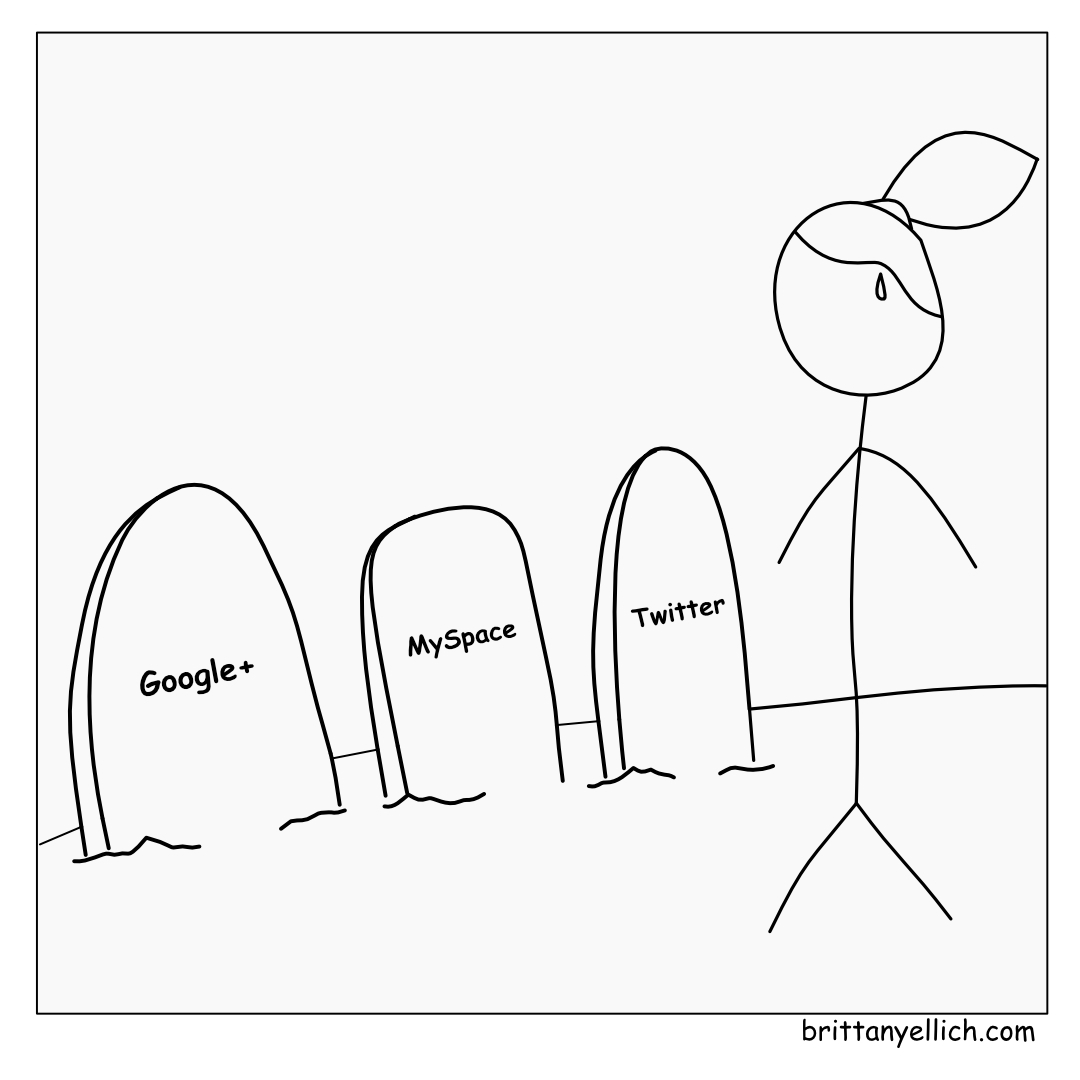
Many social platforms started as human-centered. Then they had to start making money. A lot of them chose the easy path: advertisements. Those advertisements created algorithms that drove engagement and kept people on the platforms. The platforms started A/B testing to get folks to spend more and more of their time scrolling, because the more time spent on the platform, the more ads they could show. Over time, the content that performed best was the most divisive, because that was what kept people looking, interested, and engaged.
The result is that social media has become, ironically, some of the loneliest places to be. When you open Instagram today, most of the content you see is advertisements and not posts from the actual people you’re trying to connect with. Users lose trust, genuine connection, and autonomy over how they spend their time as they become more addicted to these platforms.
I don’t think any social media platform was designed to do this. But it’s where most of them have ended up. If you open Facebook or Instagram or X (formerly Twitter), most of what you see is ads, hateful content, or mind-numbing videos designed to keep you entertained but not informed.
Another thing that makes this difficult is that these platforms are really hard to leave. Once you have a group or community connected on a platform, getting everybody to move at once is nearly impossible. Folks are used to these apps because the platforms have been designed to create habits that keep people coming back.
In mainstream social media platforms, you are the product. For that reason, I have mostly abstained from social media, except for the past couple of years where I’ve started to spend a little more time on Bluesky.
I started using Bluesky in November of 2024 when there was a big influx of users coming over from Twitter after the November 2024 presidential election. For the most part, I really enjoyed being there. There were no advertisements, and there was no downranking of links, so it felt like a place that was open to meeting, sharing, and connecting. I made some actual friends on Bluesky, and it’s a place where I feel comfortable being myself because of the safety and moderation mechanisms built into it. I found real connection on the internet again, and it felt like it had been a long time since I was able to find that.
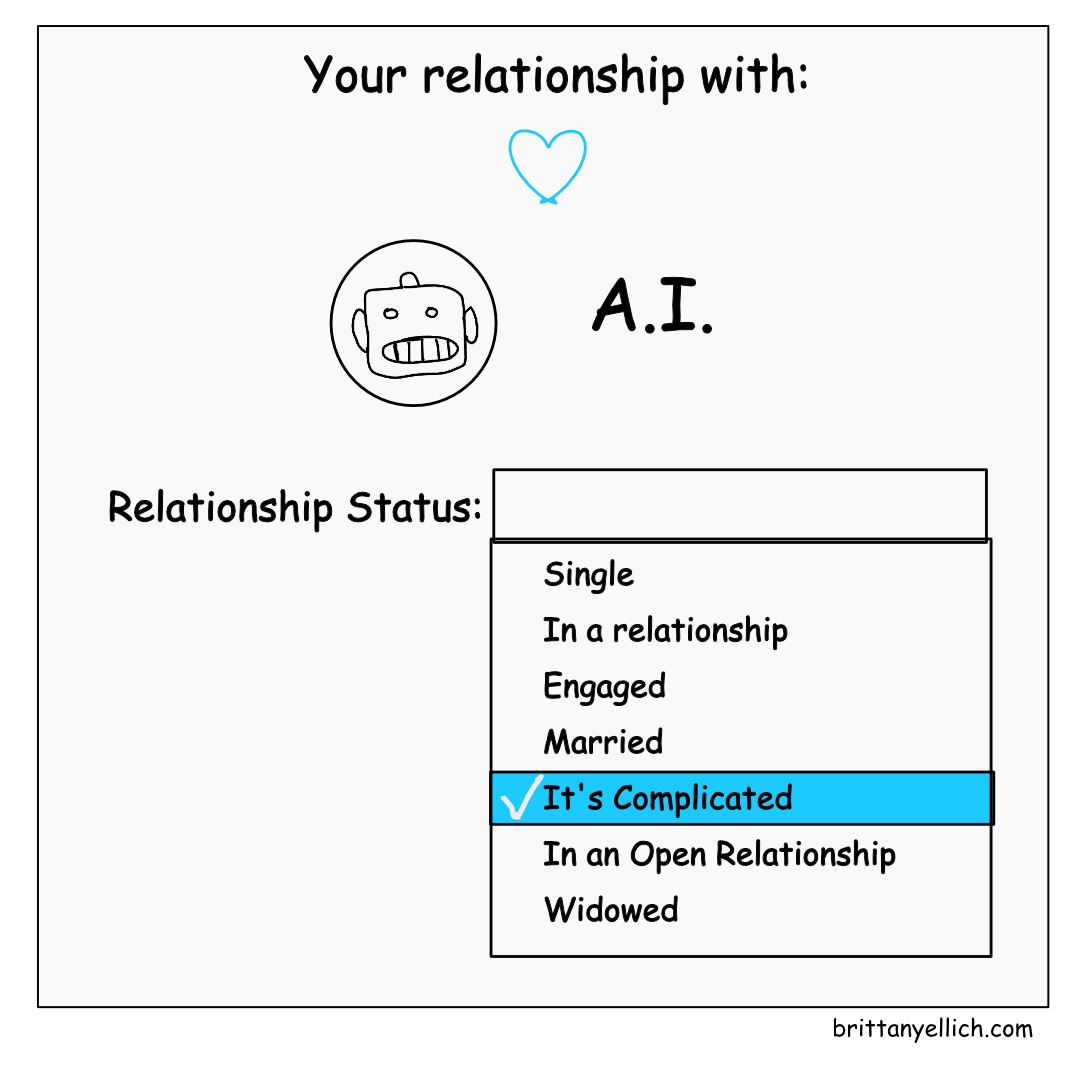
Last year, we interviewed Nick Gerakines on the Overcommitted podcast. As part of that conversation, he started talking about ATProto, which is the underlying protocol that runs Bluesky. I’ve never been extremely passionate about decentralized protocols, so I hadn’t really looked much into it until that conversation. I knew they existed, but I was not chasing them just for the sake of building something decentralized. What intrigued me was the portability concept: the idea that as a user on Bluesky or any other ATProto app, I own my data. Your social graph and all of the connections on it belong to you. Your content (your posts, likes, comments) belong to you. If a platform built on ATProto starts making decisions that you don’t agree with, it’s easy to switch to a new app that’s also built on ATProto. You don’t actually lose anything, and it can be as simple as logging out of one app and into another with the same login.
If Bluesky ends up turning into Instagram and having mostly ads tomorrow, you could leave without any issues. That was the thing that drew me in. There’s a way that they’ve engineered out the spiral that has afflicted so many other social media apps.
What ATProto actually is (for the uninitiated)
Before I go much further, I want to explain what ATProto really is for folks who aren’t as technical or aren’t familiar with it.
Each individual that signs up to Bluesky or any of the other Atmosphere apps gets an identity. That identity has its own repository, kind of like a personal folder of files associated with it. Whenever you make a post, like something, or comment on Bluesky, a new file is added to that repository under your identity. If you signed up on Bluesky, your identity and all of those files most likely live on a Bluesky server called a PDS (Personal Data Server).
However, all of those files are publicly available. Any other app built on ATProto can take those files and render them. So you could use another app like Blacksky and have the same exact posts, comments, and likes that you do on Bluesky. And if you ever decide that you don’t like what Bluesky is doing or you don’t like where they are hosting your data, you can move somewhere else, keeping your followers, connections, and content.
Bluesky is the most visible app in the Atmosphere, but it’s definitely not the only one. There are tons of apps being created by builders in the Atmosphere, including things like Stream.place for live streaming video content, Flashes for image sharing, and Skylight Social for videos. But there are many more! The Atmosphere is filled with cool applications that are all worth checking out as you get more familiar with it.
Because the Atmosphere can run on multiple PDSs, it’s considered a decentralized protocol. No one entity owns all of the data.
ATmosphereConf and the community
That brings me to ATmosphereConf. This is the conference that just wrapped up over the weekend in Vancouver, BC at the UBC campus. I go to a lot of tech conferences, and this one was different in a very cool way.
It was interdisciplinary. This was not just a software conference or a design meetup. There were journalists, scientists, builders, and several other disciplines, all in the same room. In addition to conversations about the apps people are building and ways to make things work across multiple ATProto apps, there were also conversations about how the protocol can improve things for other fields. Scientists talked about using decentralized data for research. Journalists discussed infrastructure for sharing their work that isn’t built on mainstream media. The whole conference ran a full day of ATProto for Science on the Friday before the main event.
It was incredible to see all of these people with very different backgrounds and interests coming together for one common goal: making the world better with technology. And I don’t mean this in the crappy way a lot of companies with fake missions claim how they’re making the world better while making themselves and their shareholders more money… I mean that people are actually building social apps that help people, things that bring people together in person, things that create mutual aid opportunities, things that can bring together scientists, citizens, and lawyers to build a future we all want to be a part of.
The first thing I noticed about the conference was this: in building a decentralized protocol, the community has somehow managed to centralize the people.
There were some talks that really stood out to me. Erin Kissane’s talk, “Landslide,” was the opening keynote for the main conference day. She talked about how we are currently living on shaky ground and that our information systems are crumbling. ATProto is an opportunity to fix that. (Erin has been doing related work on this for a while. Her 2025 ATmosphereConf talk in Seattle and her essay on the same theme are both worth your time.)
I also attended Rudy Fraser’s talk on Blacksky, which was excellent. It was an overview of a lot of the things he learned by building Blacksky and the Blacksky community, much of which has actually brought people together more in person than just online.
Two others that stood out:
Dan Abramov’s talk on “Social Components.” This is related to his work on Inlay. It’s something I want to take advantage of in the near future as I’m continuing to work on groups.
Amber Case’s talk, “Waiting for the Future to Load,” about futurism and technology. Something that stuck with me was her discussion about how we always look at the technology we currently have as the extent of what’s possible, and it never actually is. Technology is always improving, often beyond what we dream of or what we can’t currently comprehend. It can be hard to imagine a future where social applications actually bring people together and support good in the world rather than division. But it’s not impossible.
I also gave my own talk about OpenSocial.community, which is an ATProto app I recently built to create communities that can work across different ATProto applications. My online communities often don’t gather in one place. Typically, we’re in something like Discord for group chat, we connect on Bluesky to share links and ideas, we use LinkedIn for anything work-related, and we use calendar apps to organize events. This group exists in multiple places, and the governance structure (meaning the setup of basic group data, roles, and administration) is spread out and hard to carry across all of them. ATProto, being built on the same protocol, gives us an opportunity to create a single governance structure for a community that can work across all ATProto applications.
I’ve been building this for a while at home alone, and to be honest, it’s been a bit lonely. I solved my original problem of just wanting to create a book club, and I hadn’t spent much time on it in the last month or so because I wasn’t sure if this was something folks were actually interested in. The conference showed me that people are both interested and excited about it. That was incredibly motivating. I spent the weekend gathering feedback on ways to improve the group structure and make it better, and I’m excited to share some upcoming changes as I help integrate this into multiple ATProto apps.
Finally, a handful of us ATProto enthusiasts in the Portland area got together at the conference and kicked off ATProto PDX. We’re very excited to bring that energy back to Portland beyond the conference. We’ll be starting monthly meetups here very soon. I’m hoping to keep these vibes going in a more local setting.
Why I’m going all in
Being a human in 2026 can be lonely. The pandemic broke down a lot of social structures in ways that haven’t recovered, and a lot of what we do still requires being connected through the internet. I’ve been working remotely for going on six years now, and that means I spend a lot of time building at home alone. While this has many advantages, and I don’t want to discount those, it also has significant drawbacks that I’m feeling more and more.
The mainstream social applications that exist don’t scratch that itch of connection that they used to when they were first created. In fact, in many ways, they make it worse. I’m alone, and I’m being advertised to. (Admittedly, I might be out a few hundred bucks, because many of these ads are very good at targeting me.)
But I have a skill. I can build things. And if I’m being honest, I’m pretty darn good at it. I can build applications and software that connect people, and I think ATProto is the right medium to do that. Seeing the energy from the conference has helped me believe that this is something that’s here to stay, and it’s something that people are dedicated to for the long term.
One of the cool things about this community is that many folks are willing to give up parts of what they’ve been working on individually in the hopes of creating something that’s interoperable. That can be rare in developer spaces. A lot of times, people are working on the thing they want to work on and don’t want to make concessions to build something that works for more people. This makes sense if you’re building something to make money on it… one person owning something generally results in a better return on investment than three or four people sharing ownership. But the incentives around ATProto don’t reward that kind of selfish building. Yes, there are situations where it makes sense for a specific app to be its own thing, but there are also a lot of reasons for the community to work together, and the community is filled with incredibly smart, talented, and dedicated humans who are all working towards the same goal.
I’m spending my limited free time building on ATProto because I think this might be the way to create a more connected and more human internet. As someone raising three small children that will one day connect to the rest of the world online, this is incredibly important to me. I want social applications that work for humans for the entire lifecycle of the application, not just at the beginning to get everybody hooked and maximize profits later on. And I think this can work for more people than just developers. Scientists, journalists, hobbyists, artists… anyone who wants to share the things they’re doing with actual humans.
Whether you’re a builder who’s interested in learning more about ATProto, or somebody in another discipline who thinks they can benefit from this technology, reach out. Find others in the ATProto community who are doing the things you’re interested in. If you’re not on Bluesky yet, that’s a great place to start.
I think we can bet on ATProto together and build something that’s different. Something that’s human. If you want to find your place in this community, reach out. If you run an online community you’d like to bring onto ATProto, check out opensocial.community. And if none of that applies but this resonated with you, share it with someone who hasn’t heard of ATProto yet.
I don’t think we have to be lonely on the internet anymore.
0 Likes on Bluesky
Likes:
- Oh no, no likes, how sad! How about you add one?
Comments:
- Oh no, no comments, how sad! How about you add one?